Recently, my husband and I have been on a health kick that has inspired us to start eating WAY more veggies than we used to. According to recent data, we should be consuming up to 30 different species of fruits and vegetables a week in order to maintain a diverse and flourishing gut microbiome. Sound impossible? That’s how I felt when I first started on my veggie journey, but it turns out that this can actually be pretty fun. I view it like a game. My goal of eating 30 different types of fruits and vegetables pushes me to try out produce items that I wouldn’t normally reach for, including some of my new favorites like Japanese purple sweet potato and golden beets.
The Benefits of Artichoke
One vegetable that has recently caught my attention is the artichoke. Artichoke is a type of thistle, so it has powerful antioxidant properties that greatly support your liver health. As you may know, maintaining a healthy liver is crucial to improving your metabolic, cardiovascular, and cognitive function, so giving it a little boost every once in a while will help you out a ton.
On top of that, artichoke contains a fiber called inulin, a potent prebiotic that feeds the good bacteria in your gut. This paves the way for improved digestion and reduction in digestive issues, such as bloating, nausea, or even brain fog and fatigue.
As we’ve been exploring how to incorporate more vegetables into our diet, we’ve had to come up with some creative ways to prepare them. Our favorite so far has been chopping them up and throwing them into a big pot of soup, but it turns out that not all veggies taste great soaked in broth.
Enter: sourdough pizza.
A Better Gluten
Once we excused ourselves from the expectation to coat our pizzas in cheese and tomato sauce, we realized that there’s an endless variety of ways to top our pizzas that are both healthy and oh-so delicious. Not to mention that sourdough pizza crust is both easy on your gut and wonderfully flavorful.
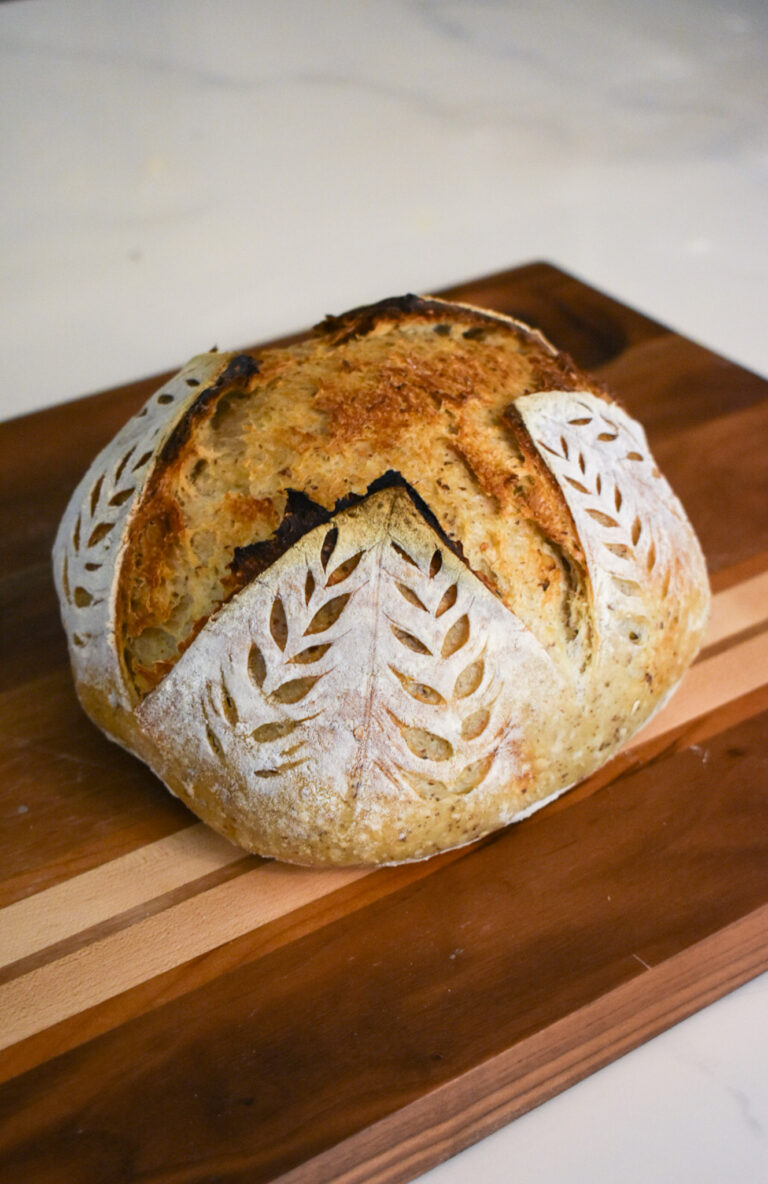
If you’re trying to steer away from gluten but aren’t ready to give it up entirely, sourdough is a great alternative. Contrary to yeast-prepared bread products, sourdough is easy to digest. The lactobacilli present in the fermentation process actually digest the gluten before you do, making it possible to consume these bread products without the feelings of bloating and headaches that can accompany gluten consumption for some.
So if you’re ready to try a meal that’s easy to make and great for your gut, here’s your golden ticket.
Ingredients
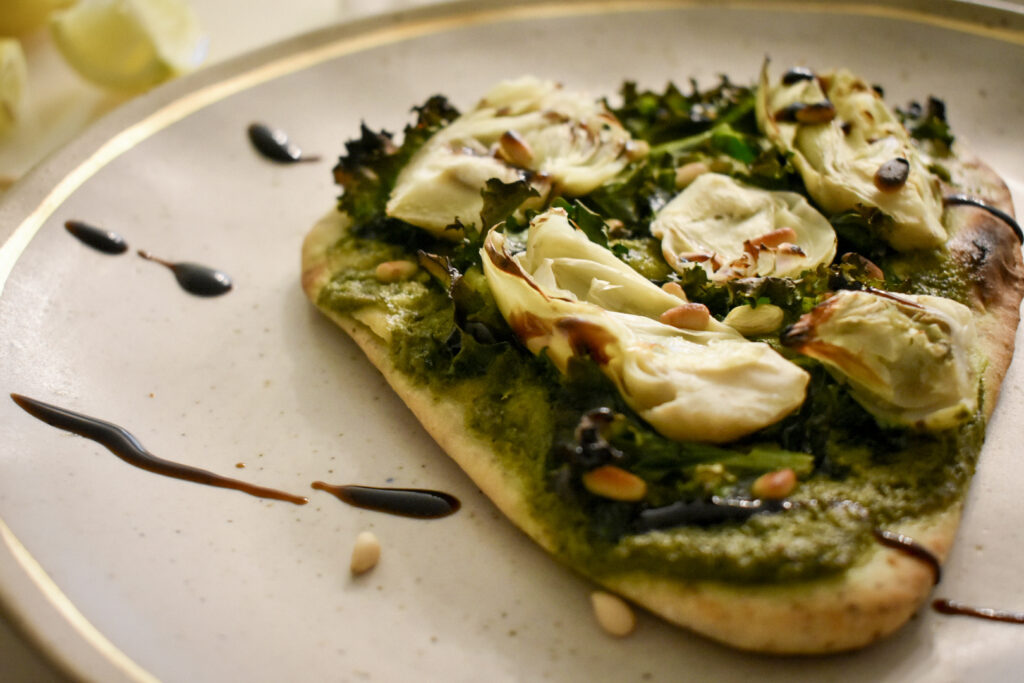
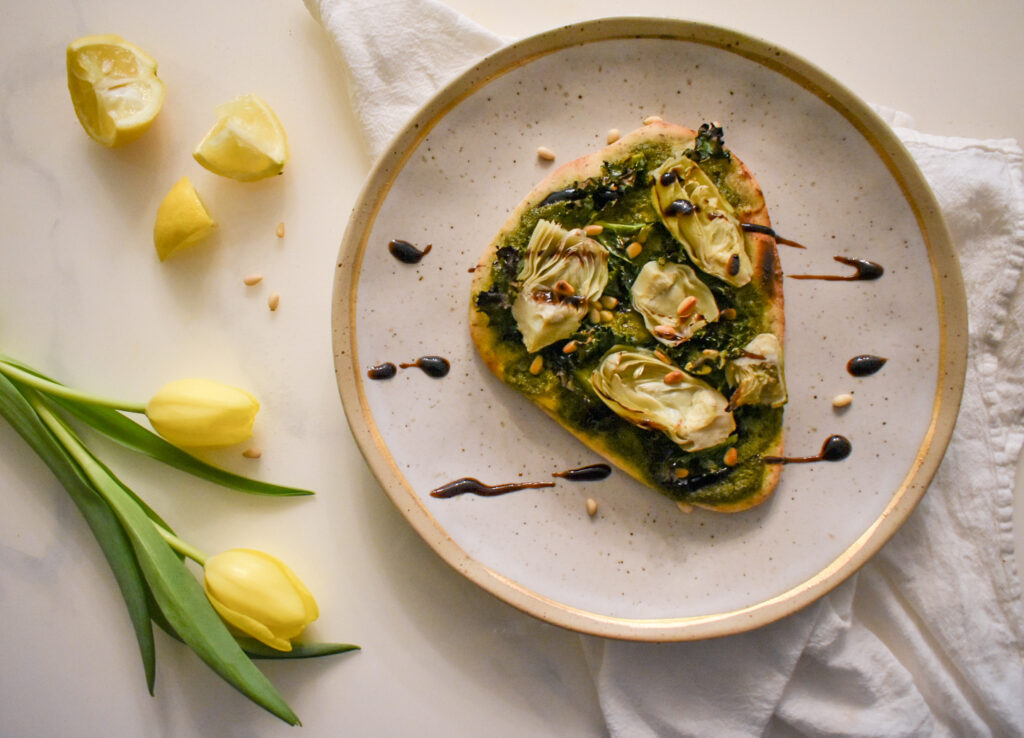
For this recipe, we’re topping our pizza with a delicious combination of pesto, artichoke, kale, and a squeeze of lemon. I also like to garnish it with a drizzle of balsamic glaze and pine nuts. If you don’t have all these ingredients on hand, or you’re just not a pesto person, feel free to switch out anything for an alternative.
For the Dough
Flour: pizza flour works best, but any type of flour will do for this recipe
Olive Oil: softens the dough (and gives an added boost of antioxidants too!)
Mature Sourdough Starter: Perform the float test to see if your starter is ready. Drop 1 spoonful of starter into a glass of lukewarm water. If it floats, it’s ready to use! If it sinks, it might need more time, or you might need to re-feed it. In the winter months, my starter usually peaks between 8-12hrs post-feed.
Salt:
Water:
For the Toppings
Pesto: This basil and olive oil spread makes a great base for a pizza. I like to purchase mine organic in order to maximize the health benefits. You can also substitute pesto for a base of your choice, like hummus or low-sodium tomato sauce.
Artichoke: A fiber-packed, cholesterol-lowering, antioxidant-rich slam dunk of a vegetable. To make life easy, buy frozen artichoke hearts over raw artichoke in the produce aisle. That way, you don’t have to go through the hassle of chopping them up and baking them (I avoid canned artichoke for the excess salt they sneak in there).
Kale: Rich in Vitamin K
Lemon:
Step-by-Step Instructions
Step 1: Prepare the Dough
To start, you’re going to want to prepare your sourdough 8-12 hours ahead of time. To put it simply, you can prepare the dough first thing in the morning if you’re making pizza the same night, or you can prepare it the night before for pizza at lunchtime. Luckily, this is quick and easy to do.
Combine the flour, salt, water, and mature starter in the bowl of a stand mixer and mix on low speed for 2 minutes or until well combined. Then slowly add the olive oil while the mixer is running. Once the oil has fully incorporated into the dough, turn up the speed to medium and mix for 8-10 minutes, or until the dough is tough and stretchy.
Step 2: Bulk Ferment
Cover the bowl with a damp tea towel and let the dough ferment for 8-10hrs.
Step 3: Divide the Dough
After the bulk fermentation is done, remove the dough from the bowl and set it out on a clean, floured surface. The dough will have risen slightly.
Divide the dough into 4 sections, rolling each section out into circles about 1/4 in thick. Arrange the pizzas on a large baking sheet and preheat the oven to 475°.
Step 4: Add Toppings
Decorate with toppings. For this pizza, I dressed it with a layer of pesto, sliced kale, artichoke hearts, and a squeeze of lemon juice.
Step 5: Bake
Bake the pizzas at 475° for 12-15 minutes, then turn the heat up to broil for the final 2 minutes. This will ensure you get a golden, crispy crust on your pizza.
Remove pizzas from the oven and let them cool for 5 minutes before serving.
Tools
KitchenAid Stand Mixer – I absolutely love my KitchenAid stand mixer. I use it for everything, like kneading dough, grinding wheat, and making pasta. Most of all, I love how much it reduces my time in the kitchen. All I have to do is throw my ingredients in the bowl and switch it on, and then I can work on a different part of the recipe while it’s running. It’s especially useful for this recipe since the dough needs to mix for 10-12 minutes.
Nonstick Baking Sheets – These are super versatile and an essential staple to your kitchen. You’ll need one or two of these, depending on the size of your pizzas.
Dough Cutter – Having one of these handy will inevitably make your life easier. Trust me, I never thought I would use mine as often as I do when I first bought one.
Other Variations
If kale on pizza is really just not your thing, there are countless other topping variations. The good news is that you can switch out toppings with virtually no effect on the above recipe, so go crazy. To make it simple, I’ve collected a few different recipes and detailed them down below. Try these out or get creative and make one of your own!
Margherita
Tomato Sauce
Fresh Mozzarella Cheese
Fresh Basil Leaves
Drizzle of Balsamic Glaze
Barbecue
Barbecue Sauce
Sliced Red Onion
Grilled Chicken
Bacon Bits
Pineapple
Shredded Mozzarella Cheese
Artichoke and Pesto Sourdough Pizza
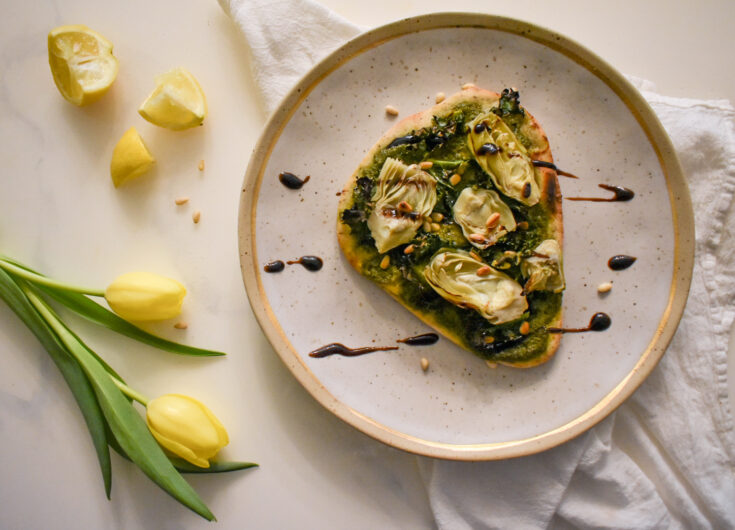
This recipe incorporates the method of long-fermenting the dough to improve both digestibility and flavor. We'll top it with artichoke, pesto, kale, and lemon for a deliciously healthy dinner.
Ingredients
Sourdough Pizza Dough
- 600g all-purpose flour
- 115g mature sourdough starter
- 25g olive oil
- 350g water
- 10g salt
Toppings (per pizza)
- 1-2 tbsp pesto
- 1/2 cup fresh sliced kale
- 3-5 frozen artichoke wedges
- A squeeze of lemon
- Optional: a drizzle of balsamic glaze and pine nuts to garnish
Instructions
- Prepare the dough by combining the flour, salt, water, and mature starter in the bowl of a stand mixer and mix on low speed for 2 minutes or until well combined.
- Slowly add the olive oil while the mixer is running. Once the oil has fully incorporated into the dough, turn up the speed to medium and mix for 8-10 minutes, or until the dough is tough and stretchy.
- Cover the bowl with a damp tea towel and let the dough ferment for 8-10hrs.
- After the bulk fermentation is done, remove the dough from the bowl and set it out on a clean, floured surface. The dough will have risen slightly.
- Divide the dough into 4 sections, rolling each section out into circles about 1/4 in thick. Arrange the pizzas on a large baking sheet and preheat the oven to 475°.
- Optional: Roll the edges in slightly all the way around the pizza, about a quarter inch, to create a crust.
- Decorate with toppings. Use the pesto as your base, then build your pizza with kale and artichoke.
- Bake the pizzas at 475° for 12-15 minutes, then turn the heat up to broil for the final 2 minutes to golden the crust.
- Remove pizzas from the oven and let them cool for a minimum of 5 minutes before serving.